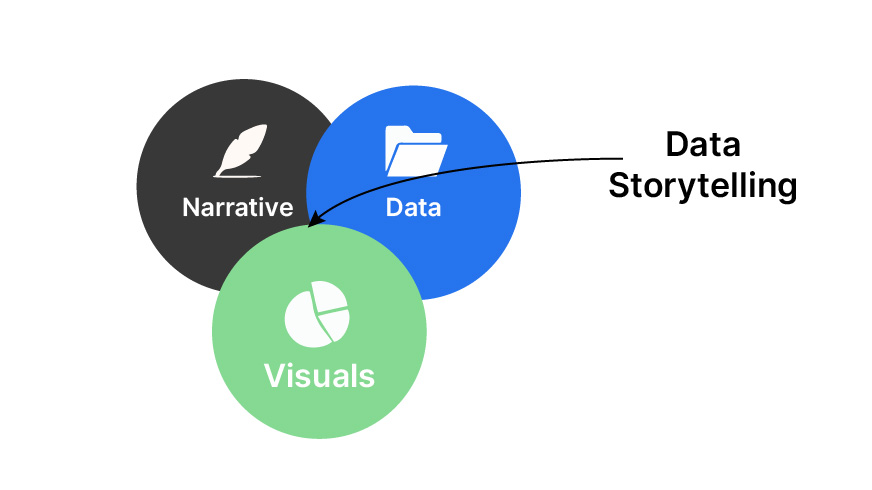
Six months ago, I met Nick—a driven executive frustrated with his LinkedIn presence. His profile was incomplete, Lots of irrelevant connections, and offered little value to potential clients or partners. Nick was not generating the kind of business leads he needed. Fast-forward five months after we worked together to reposition his brand and his LinkedIn profile impressions skyrocketed by 1,000%, profile visits soared by 350%, and he gained 5,000 targeted connections. Today, he’s closing more business deals directly from LinkedIn than ever before.
This transformation didn’t happen by luck. It was the result of strategic personal branding that leveraged LinkedIn’s advanced networking features, authentic storytelling, and proactive engagement.
In this blog post, I’ll walk you through exactly why founders and executives need a robust personal brand on LinkedIn and break down the five key steps to build one.
Social media platforms, in general, have become saturated with generic content—making it hard to stand out. LinkedIn, however, is fundamentally different. It’s the largest professional network in the world, boasting millions of high-level decision-makers, influencers, and experts. According to some estimates:
- 4 out of 5 LinkedIn members drive business decisions at their organizations.
- LinkedIn is considered 277% more effective for lead generation than Facebook or Twitter.
For founders and executives specifically, LinkedIn offers:
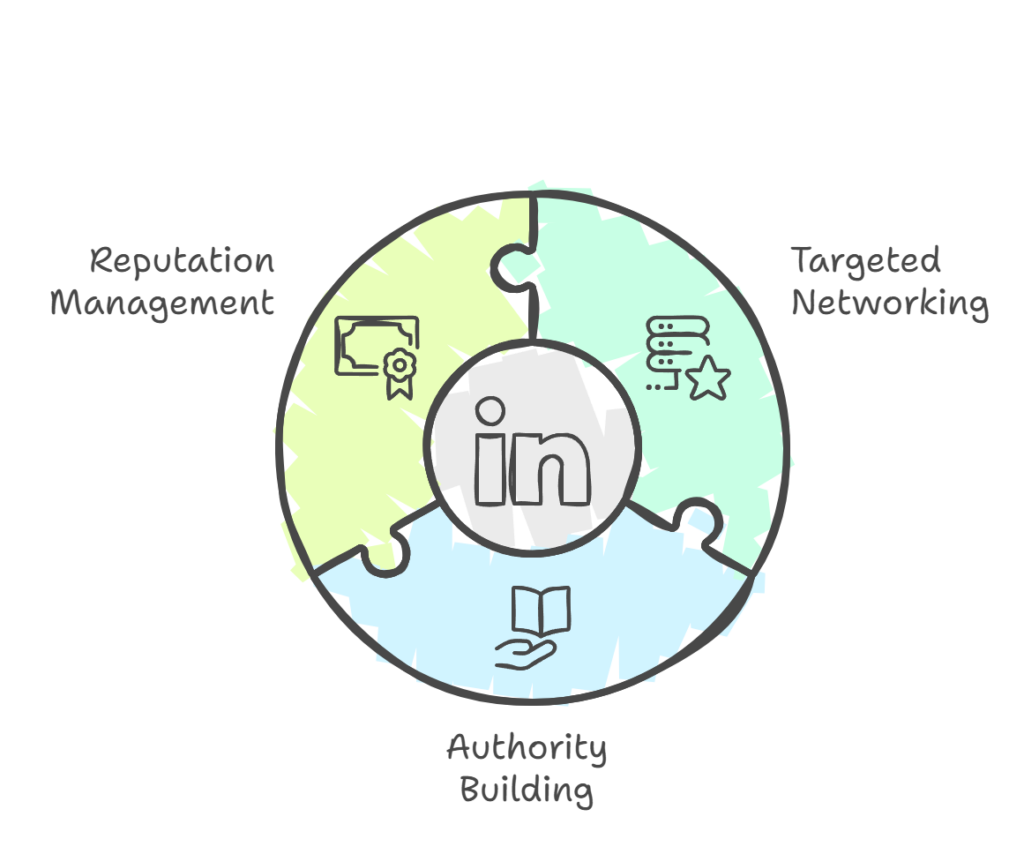
- Targeted Networking: Unlike more casual platforms, LinkedIn lets you connect with peers, partners, investors, or clients in a highly focused way.
- Authority Building: As a thought leader in your niche, you can publish content that establishes expertise and attracts new opportunities.
- Reputation Management: A strong personal brand on LinkedIn lends credibility to your company and boosts investor and customer confidence.
Simply put, a well-crafted, active LinkedIn presence can move the needle on brand awareness, partnership opportunities, and bottom-line results.
Step 1: Optimize Your Profile for Immediate Impact
Your LinkedIn profile is often the first place prospective partners, clients, or investors encounter you. Make it count.
- Professional Headshot: Use a high-resolution, friendly-yet-professional photo.
- Headline with Purpose: Your headline should reflect both your role and the value you provide. For example, “Founder | Helping B2B SaaS Companies Scale Their Revenues.”
- About Section (Summary): Tell your story here—highlight your vision, your expertise, and what makes you unique. Use specific achievements and metrics to stand out.
- Featured Section: Pin your best articles, videos, or case studies at the top of your profile for instant visibility.
Pro Tip: Don’t overlook the custom URL feature. A clean and professional URL (e.g., LinkedIn.com/in/YourName) makes your profile look polished and intentional.
Step 2: Define and Communicate Your Core Brand Message
Before you create content or connect with potential leads, you need to clarify what you stand for and who you serve.
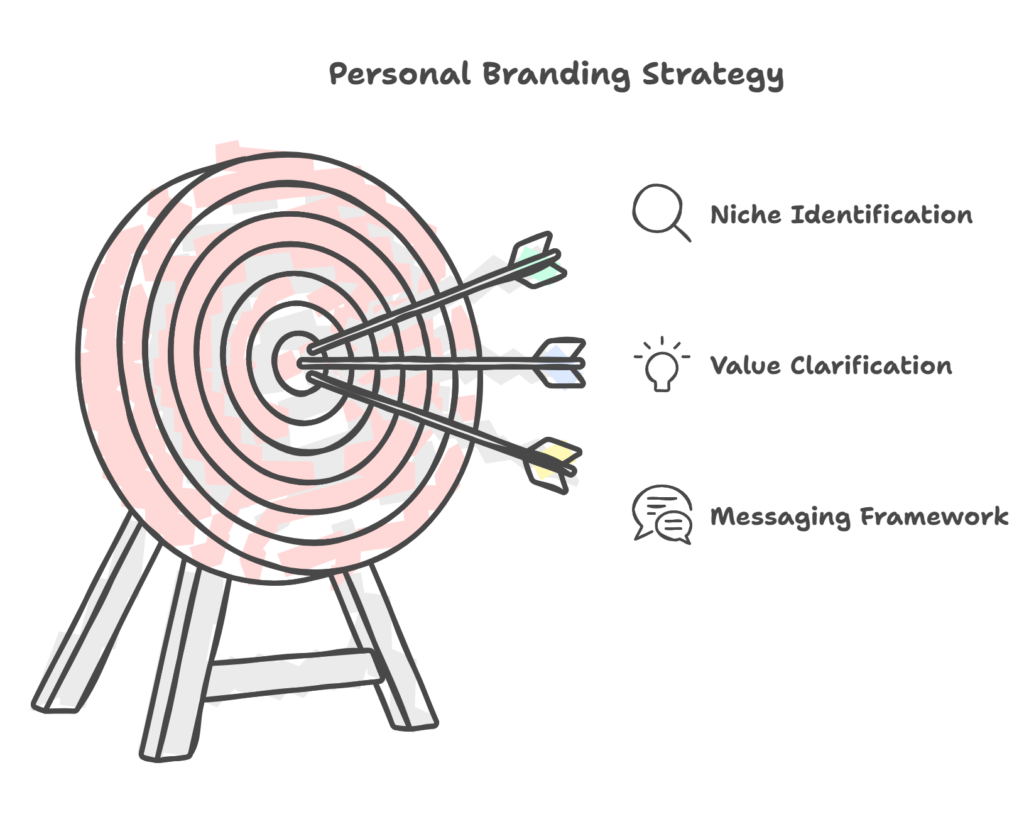
- Identify Your Niche: Determine the specific industry or topic you want to be known for.
- Clarify Your Value: Why should people listen to you? What expertise do you bring to the table?
- Create a Messaging Framework: Write a short brand manifesto or tagline that quickly conveys your mission, vision, and audience focus.
Remember Nick’s story? We refined his brand voice around Recruitment, Employer of Record, Staffing, and Recruiting. That consistent messaging helped him attract and engage more relevant connections who valued his unique perspectives.
Step 3: Consistently Share Valuable Content
Once your profile and messaging are set, it’s time to tell your story.
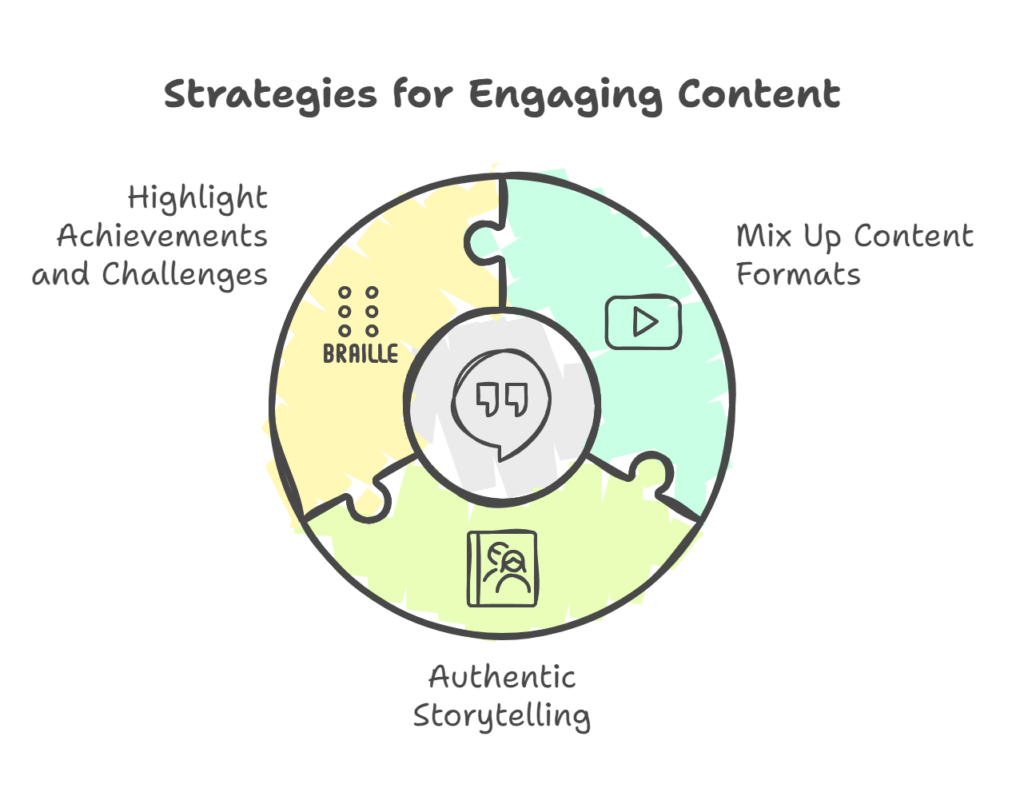
- Mix Up Content Formats: Articles, short-form posts, videos, and polls can keep your audience engaged and coming back for more.
- Use Authentic Storytelling: Share real experiences and lessons you’ve learned. Authenticity resonates, and personal anecdotes can significantly boost engagement.
- Highlight Achievements and Challenges: Don’t shy away from discussing failures or obstacles—these humanize your brand and build trust.
Consistency matters. Posting valuable content at least 2–3 times a week can keep you top of mind with your target audience.
Step 4: Curate and Grow Your Network
Founders and executives need an intentional network. If you’re connected to people who don’t resonate with your message, your content won’t drive meaningful engagement or leads.
- Clean Up Irrelevant Connections: Identify and remove connections that no longer align with your goals. This increases the visibility of your content among the right audience.
- Seek Out Targeted Contacts: Actively search for industry peers, potential partners, or clients. Personalize your connection requests.
- Participate in Groups: LinkedIn Groups related to your niche or industry can be a goldmine for networking and collaboration.
Case in Point: Nick removed 4,000 irrelevant connections and added 5,000 new, highly targeted followers. This shift directly contributed to his 1,000% content impression growth.
Step 5: Engage and Contribute to the Community
Engagement isn’t just about getting comments on your posts. It’s also about giving back—supporting others by liking, commenting, and sharing their content.
- Comment Thoughtfully: Leave insights or constructive feedback on posts within your industry. This positions you as a knowledgeable contributor.
- Respond Promptly: If someone comments on your post or sends you a message, reply within a reasonable timeframe. This fosters genuine connections.
- Tag Others: Acknowledge collaborators, industry influencers, or clients in your content. This helps expand your reach and build stronger relationships.
Creating a community around your personal brand is what turns a passive following into an active, engaged network.
Case Study & Conclusion
Building a personal brand on LinkedIn can be a game-changer for founders and executives. It elevates your visibility, credibility, and connection to the audiences that matter most. Nick’s story clearly demonstrates how strategic storytelling, targeted networking, and genuine engagement can transform your LinkedIn presence into a powerful lead-generation engine.
Ready for more inspiration? Check out our comprehensive case study where we break down another success story and reveal in-depth tactics any founder or executive can implement today.
By following these five key steps—optimizing your profile, defining your core brand message, consistently sharing valuable content, growing and nurturing your network, and actively engaging with your community—you can replicate this success for your own personal brand.
Now is the perfect time to take action and build a LinkedIn presence that aligns with your vision and goals. Your business—and your future partnerships—will thank you for it.